J

Archive

A collection of press clippings, reviews, articles, and letters from throughout John’s career — pulled from the files.

Press Quotes

John Simon is a sort of Leonard Bernstein of pop music.

LIFE Magazine — Al Aronowitz

John Simon produced The Band, Leonard Cohen, Simon and Garfunkel, Blood, Sweat and Tears, among others, and now, with his own album, he has produced a record that may be better than anything done by any of the above-named performers. The consistency of inventiveness, both in lyrics and music, is rather staggering.

SHOW Magazine

Best of the Month — a very special release demonstrating the impressive range of Simon's talent.

Stereo Review

Unique, original, fresh and funny… John Simon is a superb, witty lyricist.

N.Y. Observer, Rex Reed, Review of Cabaret Act

John Simon is a songwriter whose works should be represented in a Broadway show. His lyrics and music are so witty, so charming, and so wonderful that one cannot help wondering why the moguls of the Great White Way have not discovered him. Simon writes singable, adroit, intelligent and very musical songs.

Woodstock Times

Pick of the Pop…an individuality all too rare in pop today.

TIME Magazine

Bursting with talent.

Rolling Stone Magazine

Clever, articulate songs... somewhere between Dave Frishberg and Randy Newman... an eccentric genial intelligence.

N.Y. Times, Jon Pareles

The subtle intimacy and nonchalant eloquence of his music weds to lyric lines that are consistently poignant, amusing, and stunningly clever.

Daily Freeman, Kingston, NY — Gary Alexander

...strong lyrics over solid rhythms with a good touch of humor...there's a lot to chew on.

NY Daily News, David Hinckley

Simon's songs are very honest, funny, and real... a wonderful craftsman of song.

Village Voice, Paul Gorman

A true original, must be heard to be believed.

Stereophile

…had the audience dancing in their seats.

Daily News, Review of Twyla Tharp Performance

A deft and melodic texture of sonic occasions, ranging everywhere from march to waltz to disco.

Newsweek, Jack Kroll, Review of Twyla Tharp Performance

Simon's music is the highpoint; it's a stylish pastiche that includes elements of circus music, big band, Dixieland, baroque music, rhythm and blues and rock… yet it has a clarity of focus.

Newsday — Wayne Robins, Review of Twyla Tharp Performance

Articles & Reviews

Stereophile, February 2006

Re-issue of "John Simon's Album"

This is one of the great "lost" albums of American pop music. Originally released by Warner Brothers in 1970, it was the first from the producer of The Band's first two albums, Big Brother's Cheap Thrills and other classics of the late 1960s and early 1970s. It sounds like all of them and none of them, while being full of the poignant, funky geniality that then seemed to suffuse the rock subculture in and around Woodstock, New York. Simon is a true original. His weirdly expressive, almost non-existent voice is alternately reminiscent of Richard Manuel's and Mose Allison's and these 11 beautifully structured songs, each quite different from the rest, are a combination of Gershwin, Robbie Robertson and the Van Morrison of Moondance, all in haunting, meticulous, sepia-toned arrangements.

It adds up to a sound that is uniquely and deeply American in all the most comforting and disturbing ways: the yearning for a youth and a home that never quite were. The album sounds no less brilliant now for having been out of print for most of the past 25 years. With John Hall, Garth Hudson, Richard Manuel, Carl Radle, Jim Gordon, Bobby Keys, etc. The remastering job is quite fine — this does not sound like the typical compressed, limited, candy-coated Warner Bros. Pop album of 1970, but is rich and warm and crisp by turns. But the music must be heard to be believed.

Woodstock Times — November 17, 1994

Feature article by Robby Berman. Click to enlarge.

Cash Box, January 29, 1966 — The Cyrkle with Brian Epstein and producer John Simon

Woodstock Times — May 4, 1995

Kleinert/James Arts CenterGary Alexander

John Simon, Woodstock Times portrait

When he walked out, unannounced, with a satchel before Saturday night's performance at the Kleinert, John Simon was making a sly comment. He turned on the lamps in the living-room set and plopped his rucksack onto a footstool next to the piano bench he settled on beside a borrowed Baldwin grand piano. Simon then leisurely withdrew a cup and thermos to make himself a spot of tea with honey prior to tinkering with the ivories and locating some sour notes, which he then corrected with a tuning wrench drawn from the same bag. Finished, the "workman tuner" then packed up his kit and strolled offstage to await the announcement of songwriter/entertainer, John Simon.

His little charade cut a bit deeper than Victor Borge-style shenanigans by underlining the near-anonymity of a layer of popular artists on the southside of legend. Simon has been better known for the hand he lent to others during the years he produced "monster hit" albums by more than a score of household names. His own solo records of the early '70s were almost forgotten when he turned his attention to raising a family, rather than becoming a "rock'n'roll martyr" (as he explained his disappearance from the scene in response to a later question from the audience). Now, with the kids grown and with matured hair that is graying at the temples and has the benefit of drying more quickly after a shower than it used to, Simon is finally ready to take his shot at martyrdom.

Chances are this decision was stimulated by the success of his first release in almost two decades, On The Street, issued here by Vanguard Records but originally commissioned by the Japanese corporation, Pioneer/LDC, which was reacting to a core of Simon's "crazy fans" in Japan who never did forget the artist. Following its 1992 appearance in that country, the album was ranked with Eric Clapton's Unplugged and a Peter Gabriel LP as the year's three best records.

Simon's compositions, which sometimes flirt with show music and fringewack jazz, belong in that nebulous musical realm reserved from the chart-skipping orbits of rarebreed folks like Van Dyke Parks or Mason Williams. He's capable of irony in shades more subtle than Randy Newman and heartstring stroking less self-possessed than Jimmy Webb.

An uptempo biographical spoof opened Simon's song package, followed by several stirring tunes from an upcoming album, the wry "Everybody Thinks That I Left Town" and the powerful "Touch Your Heart." The former reflects the plight of a composer so busy at home, perhaps, that everybody thinks he's "in L.A. or dead," whichever is most remote to the Northeastern mind. The latter, which starts out with emotions raised by a subway trumpeter playing stunningly "in the face of Armageddon," builds into an appreciation of life's most precious little things. It was one of a number of clues in the wit-peppered evening to indicate Simon's songwriting powers are still on the rise.

As the songs unfurled, telling of the "kindest kind of dreams" or the caprice of fortune, each wrought its own landscape of mood and texture. Against the flashing red, black and white backdrop of a dramatic Ernest Frazier painting, Simon attacked the keyboard with raucous grace and sophistication, raising his stretchmarked voice to the contour of his melodies. He reached back to his first album for the enigmatic fantasy teaser "Song Of Elves" and "Motorcycle Man," and even offered an expanded version of "Did you See?" with a brilliant new movement and verse that makes the song more than twice what it ever was.

After a bouncing, jiving instrumental called "Rest My Voice," Simon presented the tender "She Chose Me" (another indication that the album shaping up will be a blockbuster), and called a brief intermission. A voice from the din of rising listeners was heard to say, "If someone wrote a song like that for me, I'd faint."

High points on the second half were scored by the jazz-toned "One Lucky Break"; the rollicking "Two Ways Of Looking At The Same Thing," a gripping song about the homeless, and the title tune of the last album, which has a chorus like a fast tide and on which Simon was helped with on the CD by Levon, Rick and Garth.

Other memorable entries included "Demon Love," a story song suggestive of elaborate production and "One Fork, One Plate," which demonstrates there's nothing trite about loneliness. "Dreamland," a whimsical ballad, declares, "Ask me how I know there's a God/Because he made the Land of Nod…Dreamland."

The humor-dusting curlicue signature touches of garnish on pieces like "Piano Playing Fool" found classical root when Simon tried his hands at Mozart's maybe counterfeit Sonata 19 and a feverish Bach invention. Simon encored with his ode to Samaritan morality, "Friend To the End," and a sarcastic tall tale from his Journey album, "Slim Pickins In The Kitchen."

Throughout the performance, Simon displayed waggish drollery in his banter and a jocular, peevish gentility toward spontaneous and unexpected audience interplay. "Shall we talk some more or would you like to hear some more music?" he inquired with professorially arched brow after one exchange. Pointed observation and easy-handed self-deprecation studded the showcase. This local episode in the overdue Return of John Simon implies, overall, that he has been kept busy during his lengthy public absence by long and gentle hours of exploring human complexity and honing his own wit.
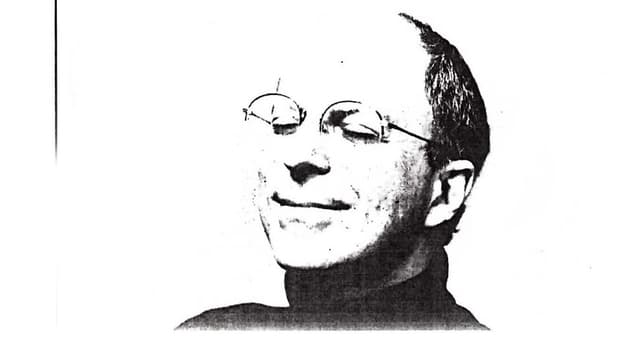
Oxford Encyclopedia

From the Oxford Encyclopedia of Popular Music

SIMON, John (b. 11 Aug. '41, Norwalk CT) — Keyboards, composer, arranger, singer-songwriter, producer; also plays brass instruments, bass and drums. Taught fiddle and piano by his father, a country doctor, from age 4; wrote his first song for his Cub Scout den; wrote musical shows and led bands in high school and at Princeton U, leading a band to the finals in the first Georgetown Intercollegiate Jazz Festival. Began at Columbia Records as a trainee producer, assisting in jazz, original cast albums and special projects for Goddard Lieberson. They allowed him $500 to produce "Red Rubber Ball", co-written by Paul Simon and Bruce Woodley (of the Seekers); it was a no. 2 hit '66 by the Cyrkle (pop group from Easton PA named and managed by Brian Epstein). In '67 he produced/arranged the first album by Blood, Sweat & Tears, Child Is Father To The Man (for comparison, the Sony CD reissue has the original audition tapes, made before Simon took over), and in '68 hit the big time: BS&T went top 50, The Songs Of Leonard Cohen did even better (Simon was particularly pleased with the use of women's voices on it) and Big Brother And The Holding Company's Cheap Thrills, with Janis Joplin, best of all. Contrary to rumor, he did not take his name off Cheap Thrills because he didn't like it, but because he had made a pact with Howard Alk not to take credits: they thought that "if you knew your name was going to be on it, this would color your effort and prevent it from being pure art." Simon had too much integrity to have to worry about that, and besides, Cheap Thrills was a no. 1 album for 8 weeks: he began taking credit again.

While editing Peter Yarrow's rockumentary film You Are What You Eat with Alk, he met the members of the Band (who were not yet called that), began helping them with demos for Capitol and produced and played on their first two albums, Big Pink and The Band, the work for which he is probably best known: for the second of these he put together a studio in a poolhouse in Los Angeles, with the board in the same room as the group, a revolutionary concept then. "If I'm going to be in a recording studio, I'd rather be on the same side of the glass where the music is being made. Let the engineer work on the recording end; I work on the music." His ability and the Band's experience of many years on the road resulted in two of the finest albums of the whole era; he became virtually a sixth member of the group and played on most of their work, including co-production credit on The Last Waltz '76 (music director for both concert and film, writing arrangements for many of the guests).

He also produced most of Simon & Garfunkel's Bookends, produced and played on debut albums by Jesse Ed Davis, Dave Mason and Eric Clapton, as well as on Howlin' Wolf's London Sessions '71; and worked with many more, in and out of the studio: Cass Elliot, Taj Mahal (two tours and two albums as pianist '70–'71), Phoebe Snow, Joni Mitchell, Bob Dylan, The Firesign Theater, Electric Flag, Seals & Crofts, Jackie Lomax, Bobby Charles, John Hartford and others, as well as scoring a film, Last Summer '69. His versatility allowed him to work with the polka band of Frankie Yankovic and with Gil Evans (Priestess '72). His own first albums of songs were John Simon's Album '70 and Journey '72, both on WB; he credits Paul Simon, who had heard some of his songs, with pushing him into becoming a recording artist. The albums got good reviews, but he refused to tour to promote them, seeing what the road had done to some of his friends. It is not surprising that he spent less time in the studio during the '70s and almost none in the '80s, the era "when a guitar player couldn't play a decent solo without putting it together from ten different attempts. You needed ten tracks for him alone." He stayed at home bringing up his children, taking odd jobs; he worked with Al Kooper '76, David Sanborn '78, Michael Franks and Steve Forbert '79 as well as on the original Broadway cast album Best Little Whorehouse In Texas '78.

In the '80s he composed classical music including an oratorio, two unproduced musical shows, and worked on a show by the creators of Beatlemania (which had played at NYC's Winter Garden '77 for weeks of previews without apparently ever opening officially). Rock & Roll! The First 5,000 Years ran for nine days '82, with film clips and recreations of classic hits from Little Richard to the Rolling Stones. ("It was great!" says Simon.)

Letters

Jack-in-the-Back here. We get a lot of great questions and kind words at JohnSimonMusicEtc@gmail.com and while we cannot post everything we receive, we do make a few exceptions:

Don E.November 17, 2013

Hi John,

I just got through listening to that interview you did with Michael Fremer. It got me googling, and I happily ended up here. It's great to have the opportunity to thank you for the pleasure your music has given me. My favorites are your Warner Bros. solo albums and the Lightfoot album you did. I wish that interview had devoted more time to them. Did She Mention My Name is leaps and bounds my favorite Lightfoot album, and it's your production that makes it so. Something Very Special, Pussywillows, Cattails, dude, those songs are just stunningly beautiful. Did Harry Lookofsky play on any of these songs? With the possible exception of the Lightfoot album, your first solo album is my favorite thing you've done, including the Band, S&G, etc. I first heard it in '73, didn't find my own copy until '75, and played the shit out of it. I love that record. So, thank you so much.

Oh, don't let Fremer talk you into spending more on a hifi than you spent on your 120 acres. Buy a restored tube Fisher receiver on eBay and enjoy the music.

Finding that interview was a pleasant surprise, as was finding out you are alive and well.

Best wishes, Don E.

Anonymous

Dear John: I am not very music savvy, but I ran into the recording, "Rock and Roll is an Open Wound" in a music store in Portland, Oregon. I work in a maximum security institution which houses young men from 15 to 25 years of age. I am the alcohol and drug treatment coordinator and co-facilitate a violent offender program. I play your song for my treatment groups to help them recognize what has happened in their lives and how to identify their feelings. They have incredible response to the words. They cry... they become angry, but after debriefing what they are feeling after listening to the words, they are willing to talk about their difficult years that no one ever really understood. I have been grateful for this song for a long time and never knew how to tell you what you have done for a huge number of angry young men who are looking for answers. They begin to understand why they pass those feelings on to their victims.

I guess what I would really like to say to you is thank you for the words and the understanding of young people who want an understanding of who they are and why they feel the way they do!

The writer signed her name, but, since I haven't been able to get in touch with her to thank her for this letter, I won't include her name here. I'm real proud of that letter.

David PerryMay 27, 2005Amazon Review

In 1970, I was in high school in Huntington Beach, California, and my best friend was a guy named Mike. He played piano, made very weird movies (horror, not erotic) and had a copy of this record. It had been a selection on the Columbia record club, and he liked it. I liked it even more — but it was virtually ungettable, even in the year of its release.

A couple of years down the road of asking where I could find this record at every record store I went to, I was in a very much missed emporium called Jeremiah McCain's and impressed Dave, the entrepreneur of this musical cavalcade, into finding me a copy of this record at any cost. Some years after that, said Dave got me an airplay copy liberated from local radio, and I went home to play it on my flip over needle portable stereo. I still have that copy.

This album burns with holy fire. It tells the stories you love to hear. It has the BEST rock and roll horn section of all time (sorry Tower of Power horns) and is a great great GREAT lost classic. Listen to the crisp drumming, the Leon Russell lead guitar, the everything. This is one rockin' record, for the true aficionado.

I am now fifty years old, I own nearly six thousand records, tapes and CDs. My stereo is hand wired by extra terrestrial rocket scientists. Very few classic rock albums are improved by becoming CDs. I know of whence I speak. The original pressings of the LP are very bad, very high noise, typical of a Columbia non-premium release of the time. The CD is well mastered, well balanced, and contains the songs you need to hear.

Good as Paul Simon (no relation), good as Leon Russell (who is on the record, along with Levon Helm, Bonnie and Delaney and Cyrus Faryar!!) This is one fine piece of work. Listen to it ten times before you judge it — there is a lot going on here.

I tell you three times, it's true.